
Introduction
A boiler has many important parts that work together to provide hot water and central heating. One of the most important but least understood components is the expansion vessel.
Most homeowners never see it because it is usually hidden inside the boiler or installed nearby. However, without an expansion vessel, your boiler would struggle to operate safely. The system pressure would increase every time the water heats up, which could lead to leaks, damaged components, or boiler shutdowns.
Think of the expansion vessel as a safety cushion for your heating system. It absorbs extra pressure when water expands and helps keep the boiler running smoothly.
In this guide, we’ll explain everything about expansion vessel
What Is an Expansion Vessel?
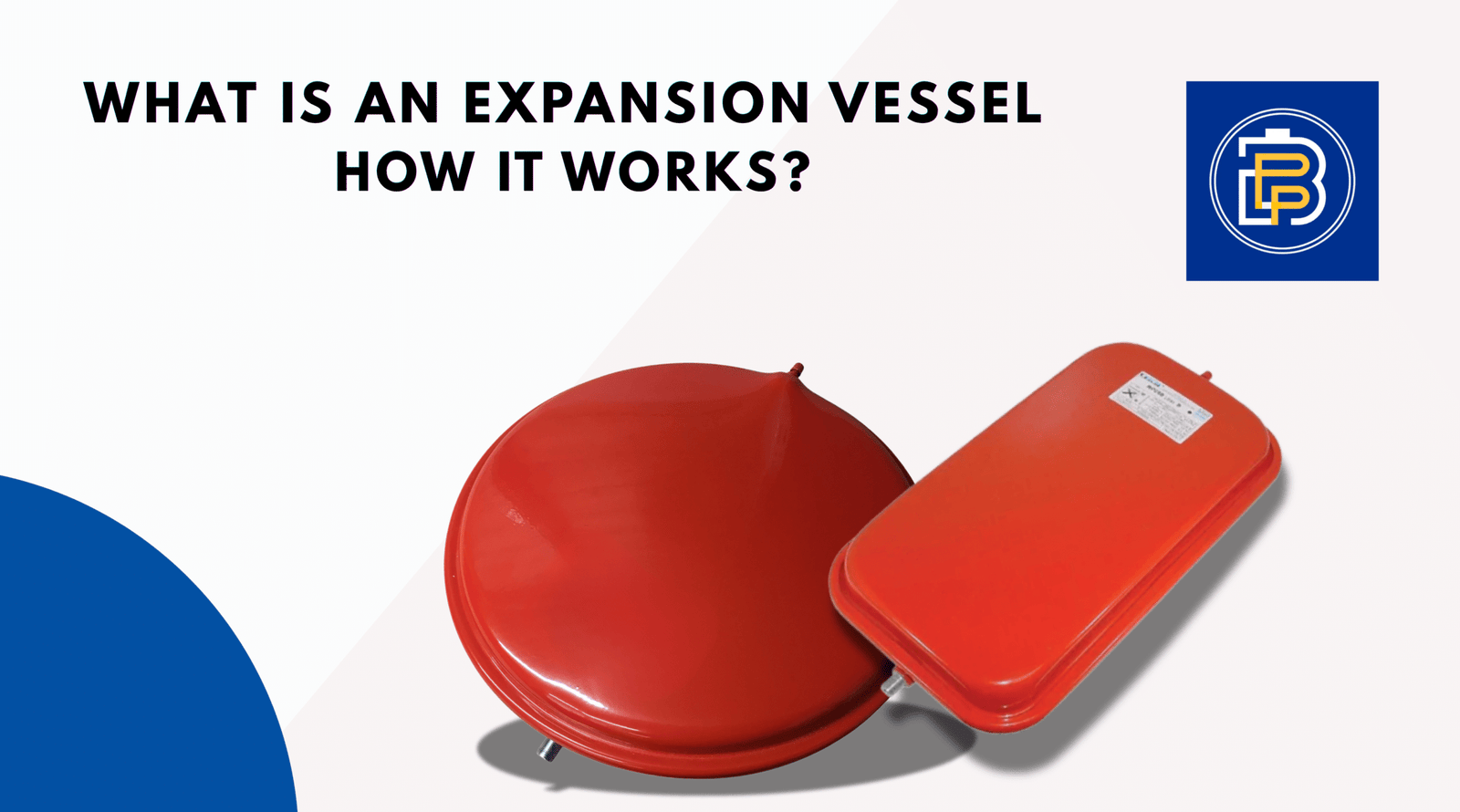
An expansion vessel, also called an expansion tank, is a pressure control device used in sealed heating systems and combi boilers.
Its main job is to control pressure when water expands during heating.
Water may look like a simple liquid, but when it gets hot, it takes up more space. Since the boiler system is sealed, the extra volume cannot simply escape. Instead, pressure starts building inside the pipes and boiler.
The expansion vessel provides a place for this extra volume, protecting the system from excessive pressure. Modern expansion vessels contain a flexible diaphragm that separates the heating water from a cushion of compressed air or nitrogen, allowing the air side to absorb pressure changes.
Why Is an Expansion Vessel Needed?
To understand why it is needed, imagine filling a bottle completely with water and then heating it.
As the water heats, it expands. Because there is no empty space inside the bottle, pressure increases.
Now imagine this happening inside your boiler every day.
Without an expansion vessel:
- Boiler pressure would rise quickly.
- The pressure relief valve could release water.
- Pipe joints could leak.
- Boiler components could become damaged.
- The heating system would become less efficient.
- The boiler could stop working due to high pressure.
The expansion vessel prevents these problems by providing a safe place for the expanding water to be accommodated.
Why Does Water Expand?
This is basic science.
When water is cold, its molecules stay closer together.
When heated:
- The molecules move faster.
- The water occupies slightly more space.
- The volume increases.
- Pressure rises inside a sealed system.
Since water is almost impossible to compress, the heating system needs somewhere for this extra volume to go.
That place is the expansion vessel.
How Does an Expansion Vessel Work?
The working principle is actually very simple.
An expansion vessel has two separate chambers.
One chamber contains:
- Water from the heating system.
The other chamber contains:
- Compressed air or nitrogen.
Between these two chambers is a flexible rubber diaphragm.
Step 1: Boiler is switched on
The boiler starts heating the water.
The water temperature gradually increases.
Step 2: Water expands
As the temperature rises, the water expands.
Although the increase in volume is small, it creates additional pressure.
Step 3: Pressure pushes into the vessel
The expanding water enters the expansion vessel connection.
It pushes against the rubber diaphragm.
Step 4: Air compresses
The diaphragm moves toward the air chamber.
Since air can be compressed, it acts like a spring or cushion.
The compressed air absorbs the extra pressure instead of allowing it to build dangerously inside the boiler.
Step 5: Boiler reaches normal operating pressure
The system continues operating normally because the expansion vessel has balanced the pressure.
The homeowner notices nothing because the process happens automatically.
Step 6: Boiler switches off
When heating stops, the water cools.
As water cools, it contracts and occupies less space.
The compressed air inside the vessel pushes the diaphragm back, helping maintain stable pressure in the heating system.
This cycle repeats every time the boiler heats and cools.
Parts of an Expansion Vessel
An expansion vessel consists of several important parts.
1. Steel Outer Body
This is the strong metal container that holds all internal components.
2. Rubber Diaphragm
The diaphragm separates water from the compressed air.
It moves back and forth whenever system pressure changes.
3. Water Chamber
This side connects to the heating system.
Hot water enters this chamber when expansion occurs.
4. Air or Nitrogen Chamber
This chamber contains compressed air or nitrogen.
It absorbs pressure by compressing when the diaphragm moves.
5. Schrader Valve
This looks similar to a car tyre valve.
Engineers use it to check and recharge the vessel’s air pressure when needed.
6. Connection Port
This connects the expansion vessel to the sealed heating circuit.
Expansion Vessel Connections
The expansion vessel works together with many boiler components.
Typical connection:
Radiators
      │
      │
Circulation Pump
      │
      │
Heat Exchanger
      │
      │
Expansion Vessel
      │
      │
Pressure Relief Valve
      │
      │
Heating System
It does not store hot water for use like a cylinder. Instead, it only absorbs pressure changes.
Where Is an Expansion Vessel Located?
In most combi boilers, the expansion vessel is located inside the boiler casing.
In larger heating systems, an additional external expansion vessel may be installed near the boiler or hot water cylinder if extra expansion capacity is needed.
Benefits of an Expansion Vessel
An expansion vessel provides many advantages:
- Maintains stable boiler pressure
- Protects pipes and valves
- Prevents unnecessary leaks
- Improves heating efficiency
- Reduces stress on boiler components
- Extends the life of the heating system
- Supports safe operation
Common Expansion Vessel Problems
Over time, expansion vessels can develop faults.
Common problems include:
- Loss of air pressure
- Split or damaged diaphragm
- Internal corrosion
- Waterlogged vessel
- Leaking Schrader valve
- Incorrect pre-charge pressure
Signs of a Faulty Expansion Vessel
You may notice:
- Boiler pressure rising too high
- Pressure dropping when the system cools
- Water leaking from the pressure relief valve
- Frequent need to repressurise the boiler
- Inconsistent heating performance
- Boiler fault or lockout messages
If these symptoms appear, the vessel should be checked by a qualified heating engineer.
How Long Does an Expansion Vessel Last?
Most expansion vessels last between 5 and 10 years, depending on water quality, system conditions, and maintenance. The rubber diaphragm is usually the component that wears out first.
Maintenance Tips
To help your expansion vessel last longer:
- Service your boiler every year.
- Check system pressure regularly.
- Repair leaks promptly.
- Keep the heating system clean.
- Have unusual pressure changes investigated early.
Regular maintenance helps prevent expensive repairs and improves boiler performance.
Conclusion
An expansion vessel may be a small component, but it is one of the most important parts of a sealed heating system. It absorbs the extra pressure created when water heats and expands, keeping the boiler and pipework safe.
Without it, pressure could rise to unsafe levels, leading to leaks, damaged components, and boiler faults. By understanding how an expansion vessel works and maintaining it properly, homeowners can improve efficiency, reduce repair costs, and extend the life of their heating system.