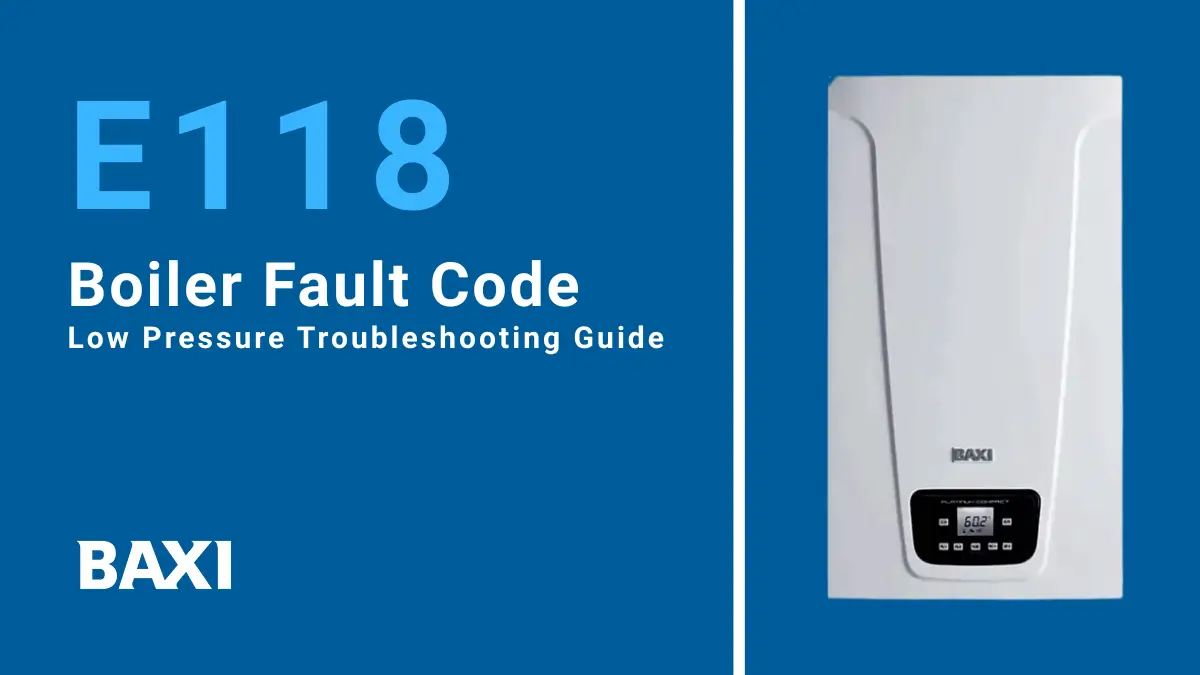
If your Baxi boiler is displaying the E118 error code, it usually means the system pressure has fallen too low for the boiler to operate safely. This is one of the most common boiler faults and is often straightforward to fix without replacing any parts.
In this guide, we’ll explain what the Baxi E118 fault code means, what causes it, how to fix it, and when professional assistance may be required.
Estimated reading time: 5 minutes
What Does the Baxi E118 Error Code Mean?
The Baxi E118 error code indicates that the boiler has detected low water pressure within the heating system. To protect internal components from damage, the boiler automatically shuts down when the pressure falls below the minimum operating level.
Most Baxi boilers operate best with a pressure reading between 1.0 and 2.0 bar when the system is cold.
If the pressure drops below this range, the boiler may stop producing heating and hot water until the issue is resolved.
Common Causes of a Baxi E118 Error Code
Several issues can cause low pressure within your heating system.
1. Water Leaks
Even a small leak can gradually reduce system pressure over time.
Common locations include:
- Radiator valves
- Pipe joints
- Heating pipework
- Boiler connections
Look for damp patches, water stains, or signs of corrosion around your heating system.
2. Recently Bled Radiators
Bleeding radiators removes trapped air but can also lower system pressure.
If you have recently bled one or more radiators, the system may simply need repressurising.
3. Faulty Pressure Relief Valve
A defective pressure relief valve may release water unnecessarily, causing a gradual pressure drop.
This issue often requires professional diagnosis and repair.
4. Expansion Vessel Problems
A faulty expansion vessel can affect system pressure and lead to repeated E118 faults.
If pressure regularly rises and falls dramatically, the expansion vessel may require attention.
5. Hidden System Leaks
Leaks beneath floors or inside walls can be difficult to detect but may continuously reduce pressure.
If you repeatedly need to top up the system, hidden leaks could be the cause.
Symptoms of the E118 Fault Code
Alongside the E118 error message, you may notice:
- No heating
- No hot water
- Cold radiators
- Pressure gauge below 1 bar
- Boiler lockout
- Heating system frequently losing pressure
These symptoms indicate that the system requires investigation before normal operation can resume.
How to Fix a Baxi E118 Error Code
Time needed: 1 minute.
- Check the Pressure Gauge
Start by checking the pressure gauge on your Baxi boiler. If the pressure reading is below 1.0 bar, the system pressure is too low and will need to be increased. Most Baxi boilers operate best at around 1.5 bar when the system is cold.
- Repressurise the Boiler
Locate the filling loop underneath the boiler and slowly open the filling valves to allow water into the heating system. Keep an eye on the pressure gauge and stop filling once the pressure reaches approximately 1.5 bar. Close the valves securely to prevent overfilling the system.
- Reset the Boiler
After restoring the correct pressure, reset the boiler using the reset button as outlined in your boiler manual. Allow the boiler to restart and check whether the E118 fault code has cleared from the display.
- Monitor the Pressure
Over the next few days, regularly check the pressure gauge to ensure the pressure remains stable. If the pressure continues to drop or the E118 error code returns, there may be a leak or another issue within the heating system that requires further investigation by a qualified heating engineer.
When Should You Call a Heating Engineer?
You should contact a qualified heating engineer if:
- The pressure keeps falling
- You suspect a hidden leak
- The pressure relief valve is leaking
- The E118 code returns repeatedly
- The boiler does not restart after repressurising
A professional can identify the root cause and prevent recurring faults.
Can You Prevent Future E118 Faults?
Regular maintenance can help reduce the likelihood of pressure-related problems.
We recommend:
- Checking boiler pressure monthly
- Inspecting radiators for leaks
- Servicing the boiler annually
- Repressurising promptly when required
- Addressing leaks before they worsen
Routine maintenance can help extend the lifespan of your heating system and improve efficiency.
Does E118 Mean You Need a New Boiler?
Not usually.
In most cases, the E118 fault is caused by low pressure rather than a major boiler failure.
However, if your boiler is older and regularly develops faults, it may be worth comparing repair costs against replacement options.
Conclusion
The Baxi E118 error code indicates low water pressure within your heating system. Fortunately, many E118 faults can be resolved by simply restoring the correct pressure using the filling loop.
If the fault returns frequently or pressure continues to fall, a qualified heating engineer should inspect the system for leaks, valve faults, or expansion vessel issues.
Keeping your boiler properly maintained and regularly checking the pressure can help prevent future E118 faults and keep your heating running reliably all year round.
Frequently Asked Questions (FAQ’s)
The Baxi E118 error code indicates that your boiler has detected low water pressure within the heating system. To protect itself from damage, the boiler will shut down until the pressure is restored.
In most cases, you can fix the E118 fault by repressurising the boiler using the filling loop. Once the pressure reaches around 1.5 bar, reset the boiler and check if the fault has cleared.
Most Baxi boilers should operate between 1.0 and 2.0 bar when cold, with approximately 1.5 bar being the ideal pressure for normal operation.
Common causes include leaks in the heating system, recently bled radiators, a faulty pressure relief valve, or a problem with the expansion vessel. If the pressure drops repeatedly, further investigation may be needed.
You should contact a qualified heating engineer if the pressure keeps dropping, the fault returns frequently, or you suspect a leak or faulty component within the heating system.