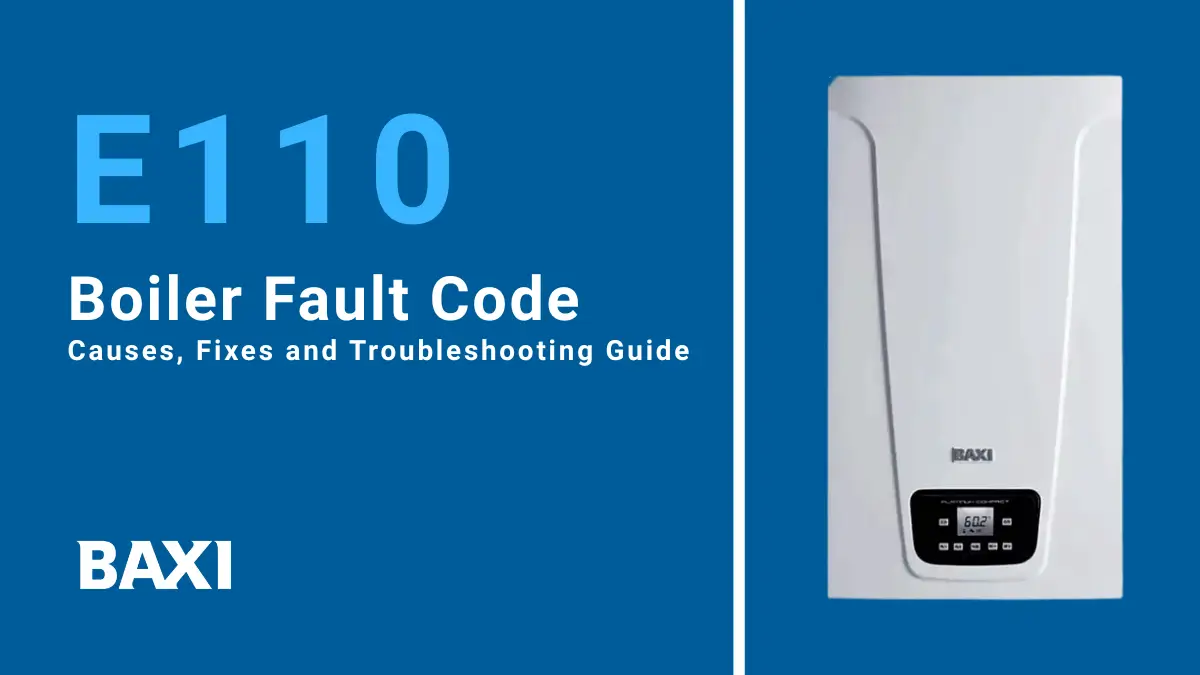
A Baxi boiler displaying the E110 error code indicates that the appliance has overheated and automatically shut down as a safety precaution. This fault can be caused by several issues, including low water pressure, trapped air in the heating system, poor water circulation, or faulty components such as temperature sensors and pumps. Understanding what causes the E110 error and how to resolve it can help restore your heating and hot water quickly. In this guide, we’ll explain the meaning of the Baxi E110 fault code, its common causes, troubleshooting steps, and when it’s time to contact a qualified engineer.
Estimated reading time: 5 minutes
What Does the E110 Error Code Mean on a Baxi Boiler?
The E110 fault code on a Baxi boiler indicates that the boiler has overheated. When this happens, the boiler automatically shuts down to protect its internal components and ensure safety.
If your boiler displays the E110 error, you may notice that your heating and hot water stop working until the issue is resolved.
Overheating can occur when heat is not being transferred properly through the system, causing the boiler temperature to rise above safe operating levels.
Common Causes of the Baxi E110 Error Code
1. Low Water Pressure
One of the most common causes of an E110 fault is low system pressure. Most Baxi boilers should operate between 1.0 and 2.0 bar.
If the pressure drops too low, water circulation can be affected, leading to overheating.
2. Air Trapped in the Heating System
Air pockets inside radiators or pipework can restrict water flow around the system. Poor circulation may cause the boiler to overheat and display the E110 error.
3. Faulty Temperature Sensor
The temperature sensor monitors the boiler’s operating temperature. If it becomes faulty, it may provide incorrect readings and trigger the E110 fault code.
4. Circulation Problems
A faulty pump, blocked pipework, or restricted flow can prevent hot water from moving through the heating system properly. This can cause heat to build up inside the boiler.
5. Heat Exchanger Issues
A blocked or scaled heat exchanger can reduce heat transfer efficiency, causing excessive temperatures within the boiler.
How to Fix a Baxi Boiler E110 Error Code
Time needed: 1 minute.
- Reset the Boiler
Start by resetting the boiler according to the manufacturer’s instructions. Sometimes a simple reset can clear a temporary fault.
- Check the Boiler Pressure
Check the pressure gauge on the front of your boiler. The pressure should normally be between 1.0 and 1.5 bar when the system is cold. If the pressure is below this range, use the filling loop to top up the system until it reaches the recommended level.
- Bleed Your Radiators
If radiators contain trapped air, bleed them to restore proper circulation.
After bleeding, recheck the pressure and top up if necessary. - Check for Obvious Leaks
Inspect visible pipework, radiators, and valves for signs of water leaks that may be causing pressure loss.
- Contact a Gas Safe Engineer
If the fault returns after resetting and repressurising the system, a professional engineer should inspect the boiler. Components such as pumps, sensors, diverter valves, and heat exchangers may require testing or replacement.
How to Prevent the E110 Error Code
Regular boiler maintenance can help reduce the risk of overheating faults.
To keep your boiler running efficiently:
- Check boiler pressure regularly
- Bleed radiators when needed
- Arrange annual boiler servicing
- Fix leaks promptly
- Keep the heating system clean and free from sludge buildup
When Should You Call an Engineer?
You should contact a Gas Safe registered engineer if:
- The E110 fault keeps returning
- The boiler repeatedly loses pressure
- You notice leaks from the boiler
- There are unusual noises such as banging or kettling
- The boiler will not reset
Professional diagnosis can identify the root cause and prevent further damage to the heating system.
Conclusion
The Baxi E110 fault code is an overheating safety warning that should not be ignored. Low water pressure, trapped air, circulation problems, or faulty components are the most common causes. Checking the pressure, bleeding radiators, and resetting the boiler may resolve the issue, but recurring faults should always be investigated by a qualified engineer.
Regular servicing and system maintenance can help prevent E110 faults and keep your Baxi boiler operating safely and efficiently.
FAQ’s – Baxi Boiler E110 Fault Code
The E110 fault code indicates that the boiler has overheated. As a safety measure, the boiler will shut down to prevent damage to internal components.
Yes. Low system pressure is one of the most common causes of the E110 fault code because it can restrict water circulation and lead to overheating.
Most Baxi boilers should operate between 1.0 and 1.5 bar when the system is cold. Always check your boiler manual for the recommended pressure range.
Locate the reset button on the boiler control panel and follow the manufacturer’s instructions. If the fault returns after resetting, further investigation may be required.
Yes. Air trapped in radiators can reduce water circulation, causing the boiler to overheat and display the E110 fault code.
The fault itself is a safety warning designed to protect the boiler. However, repeated overheating should not be ignored and should be investigated by a qualified engineer.
You may be able to fix simple causes such as low pressure or trapped air by repressurising the system and bleeding radiators. More complex issues require professional diagnosis.
You should contact a Gas Safe registered engineer if the E110 fault persists after resetting the boiler, repressurising the system, or bleeding the radiators.